
Datacenter proxy and residential proxy choices for catalog health checks should depend on sensitivity to region, latency, field completeness, and replay cost. The audience is catalog monitoring, data engineering, and ecommerce intelligence teams. The comparison fits public catalog pages and public search entry points, not private systems or hidden data.
Fast health checks favor simpler lanes
Datacenter proxy lanes can work well for public catalog health checks when the task only needs page reachability, status patterns, response size, and parser coverage. These checks are usually frequent, broad, and less sensitive to local market presentation.
If the same check starts measuring local price, stock, promotion, or language fields, the proxy choice becomes more sensitive. The lane should then preserve regional context instead of optimizing only for speed.
Regional fields favor residential lanes
Residential proxy lanes are usually a better fit when the catalog page changes by market. They help keep region labels, currency, delivery hints, and localized modules aligned with the monitoring target.
| Need | Datacenter proxy fit | Residential proxy fit |
|---|---|---|
| Page health | Strong for broad checks | Useful when health varies by market |
| Regional price fields | Limited when context shifts | Better for market-specific records |
| Cost control | Good for low-risk sampling | Best reserved for high-value fields |
Hybrid routing keeps cost tied to value
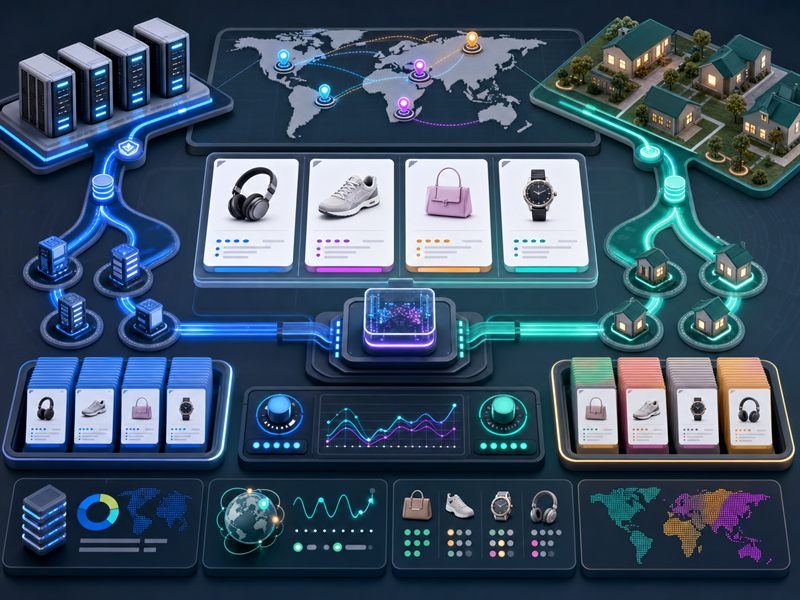
A practical setup uses datacenter proxy lanes for broad public page health and residential proxy lanes for regional catalog records. Replay should follow the same lane type as the original record when the disputed field depends on market context.
This split avoids spending residential capacity on low-risk status checks while still protecting fields that drive pricing, availability, or market analysis.
Choose by record risk, not label preference
Scrapingbypass Proxy can support both lane types, but the better choice is the one that produces complete, repeatable public records at an acceptable cost. Track usable record rate, region match, field completeness, and replay cost before expanding volume.
FAQ
When is a datacenter proxy enough for catalog health checks?
It is usually enough when the task measures public page reachability, response size, parser coverage, and broad status patterns without relying on regional fields.
When should catalog monitoring use a residential proxy lane?
Use a residential proxy lane when price, stock, language, delivery hints, or localized modules must match a specific public market.